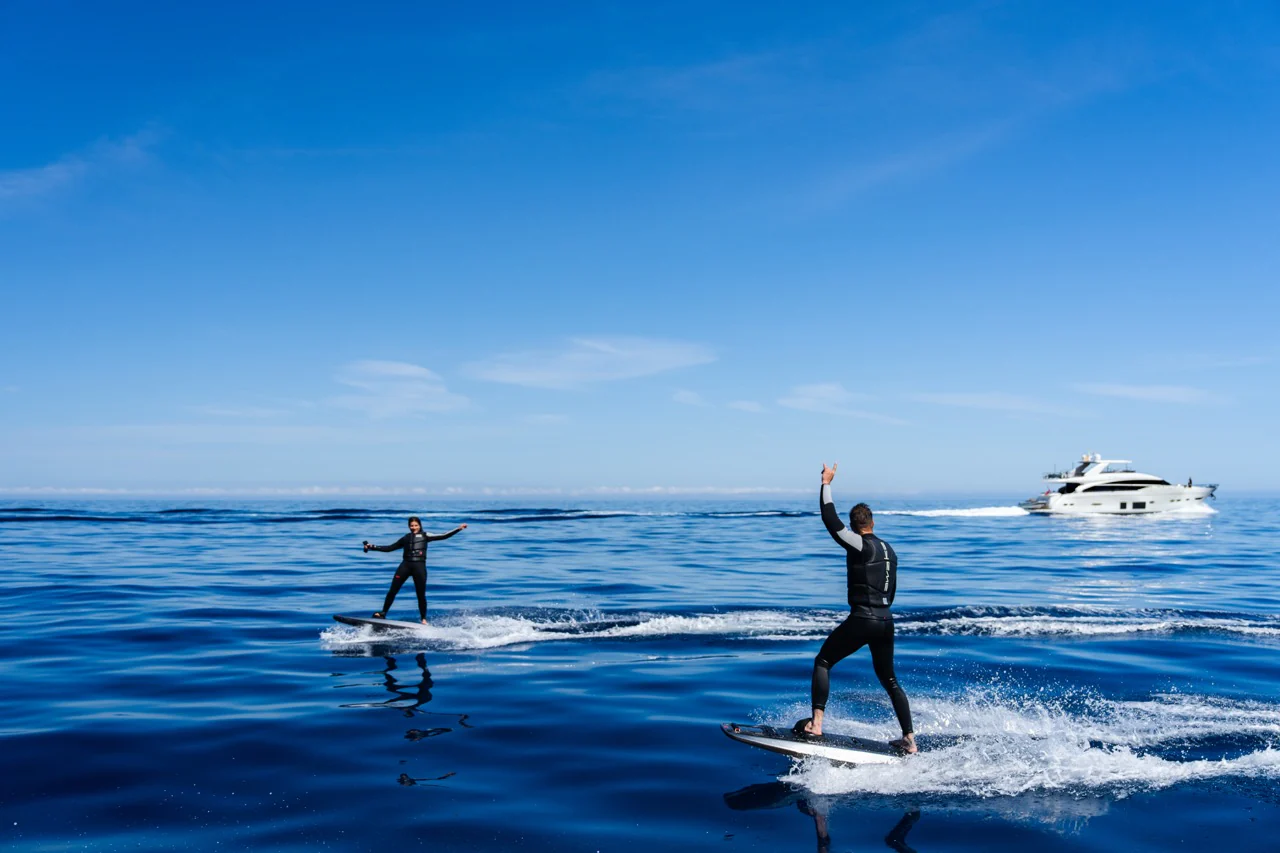
Stand on a beach where both kinds of board are being ridden and the difference is obvious within seconds. One rider is carving across the surface, spray coming off the rail, board and water in constant conversation. The other is gliding a metre or so above a flat, quiet line, the hull clear of the water entirely. Both are electric surfboards. They ask different things of the rider, suit different water and reward different temperaments, and the right choice comes down to how you want to spend your time on the water.
How each one feels
A jetboard rides on the surface. An electric jet drives the hull, the board stays in contact with the water, and every change in throttle and weight comes straight back through your feet. It feels closer to surfing or wakeboarding than anything else, with the speed and turning response that make a fast carve so satisfying. Chop is part of the ride, and many riders seek it out.
An eFoil lifts. A mast and wing set sit beneath the board, and once you reach enough speed the hull rises clear and the sensation changes completely. Noise and slap fall away, small wind chop passes underneath, and the ride becomes smooth and floating. People who love it often describe it as calm, even at pace.
Neither is the sensible or the thrilling option by default. A relaxed cruise on a jetboard can be gentle, and a committed eFoil rider can turn hard and fast.
Learning each one
The learning curves are shaped differently. On a jetboard, the early stages build in steps: ride lying down, come up to your knees, then stand. Because the board stays on the water, a small mistake usually means wobbling and correcting rather than falling. The challenge comes later, as you learn to hold more speed and lean into turns.
An eFoil can feel calm in the first moments, but the stage that matters is learning to fly. Rising onto the foil and holding a steady height takes balance and small, precise movements, and over-correcting tends to end with a fall. Plenty of first-timers get there in a session; others take longer. Calling either board universally easier or safer misses the point. They are simply learned in different ways, and a good first session with guidance helps on both.
Riding with family and friends
Think about who else will ride. A board that lives at a holiday house or on a boat often ends up shared between partners, teenagers and visiting friends with very different experience. A stable jetboard such as the RÄVIK Explore suits that mix well, because a newcomer can ride slowly on the surface while a more confident rider takes it further. An eFoil is just as shareable once each rider has learned to foil, but every new rider has that first step to make.
Carrying, launching and water depth
Practicalities shape the choice more than many buyers expect. A jetboard has a shallow draft and launches from the beach in modest depth, which matters on sandbanks, estuaries and shallow bays. An eFoil needs enough water under the board for the mast and wing, so you walk it out further before starting. It also comes apart into board, mast and wings, which helps with packing but means more pieces to carry and assemble at the water's edge.

Your local water deserves some honest thought too. Open, choppy conditions suit a jetboard's surface grip. Sheltered water with light chop is where an eFoil feels its most refined. Before you commit, check where launching is permitted on the water you plan to use.
Choosing within each range
If a jetboard feels right, the RÄVIK range covers three distinct riders. The RÄVIK Explore favours stability and an easy start. The RÄVIK Adventure suits riders who want more agility as their confidence grows. The RÄVIK Ultimate is built for experienced riders who want the most performance.
If the idea of flying appeals, the VINGA Carve is the eFoil to look at. It is an all-round board with a 77 litre hull, designed to balance relaxed cruising with confident carving, and it uses an enclosed jet for propulsion. The film below shows how it rides.
A few practical cases
You ride from a boat or a holiday house with mixed ages. A jetboard is usually the easier fit, because newcomers can enjoy it from the first session.
You live near sheltered, deeper water and want a quiet, gliding ride. An eFoil like the VINGA Carve makes a strong case.
You want speed, sharp turns and a board that works in rougher water. Look at the RÄVIK Adventure or RÄVIK Ultimate.
You have never ridden either. Try both if you can. Our guide to buying your first electric surfboard covers the questions worth asking, and a demo with our team lets you feel the difference before you decide.